
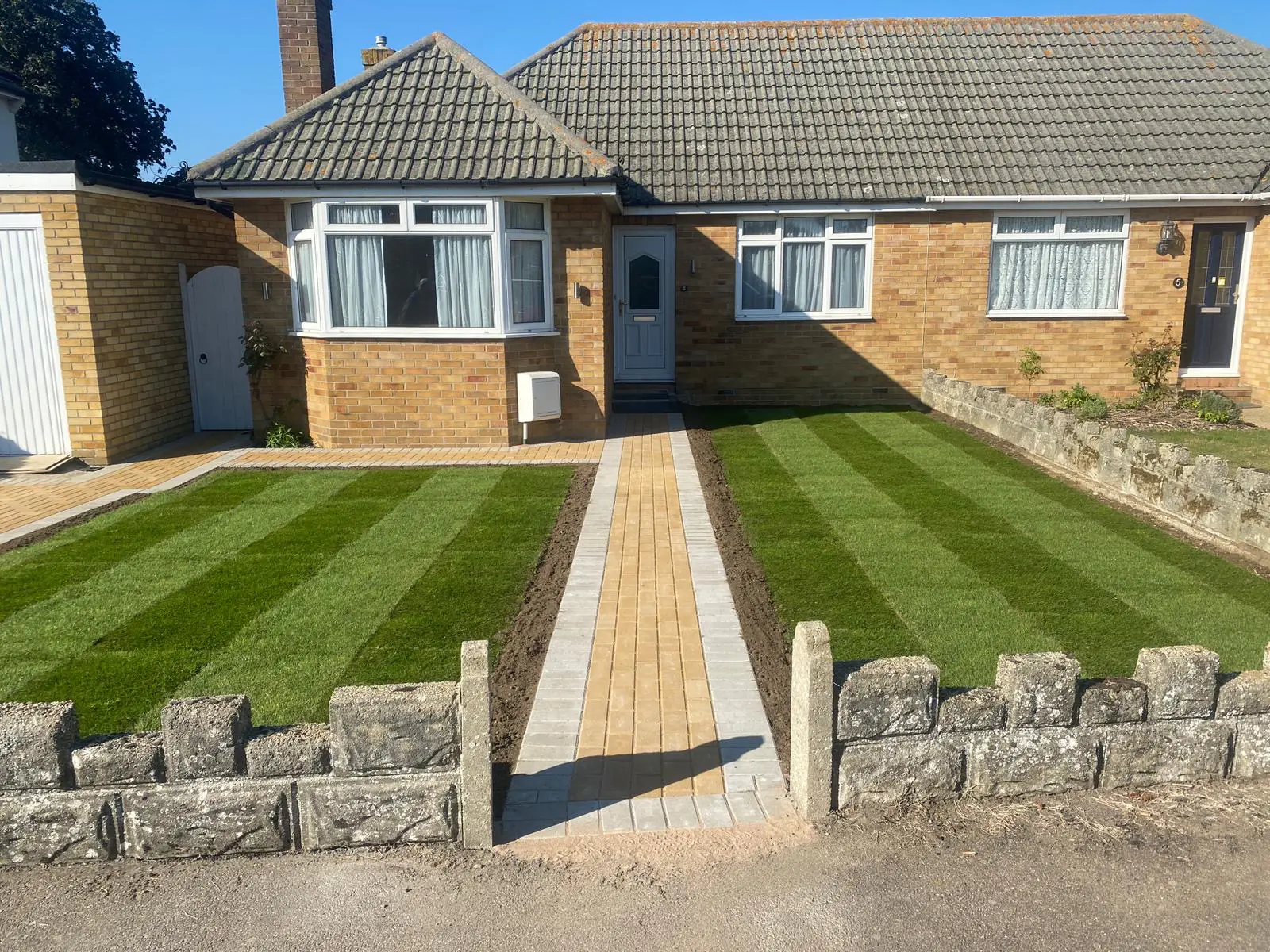
Garden Pathways
Professional garden pathway installation across Essex and Suffolk. Transform your outdoor space with beautifully crafted paths that solve practical problems and enhance your garden’s appeal.
20+
YEARS EXPERIENCE
2-3
DAYS INSTALLATION
500+
PATHWAYS INSTALLED
100%
CUSTOMER SATISFACTION
FREE
QUOTES & SURVEYS
Why Pathways Matter More Than You’d Think
The practical benefits are obvious enough. No more muddy patches. Safe footing in wet weather. A clear route that doesn’t involve trampling the lawn. But paths do more than solve problems—they change how you actually use your garden.
A well-placed path draws you outside. It invites you to walk to the end of the garden rather than just looking at it from the patio. It creates structure, separates different areas, guides the eye. Gardens without paths often feel somehow unfinished, even if you can’t immediately put your finger on why.
There’s also the question of protecting what you’ve already got. Foot traffic compacts soil, damages lawns, and wears down planted areas. A pathway takes the pressure off, channelling movement where it won’t cause harm.

How We Work
Every path starts with a site visit. We need to see the ground conditions, understand how the path will be used, and discuss what you’re hoping to achieve. This initial consultation is free and takes around 30-45 minutes.
Following the visit, we provide a written quotation covering materials, labour, and any additional work such as drainage or steps. The quote is valid for 30 days with no obligation to proceed.
Installation itself follows a methodical process. Excavation to the required depth. A geotextile membrane to suppress weed growth. Compacted sub-base for stability. Then the surface material, properly bedded and jointed. Edging to hold everything in place.
Timescales vary depending on path length and complexity. A straightforward front entrance path typically takes two to three days. More extensive garden pathway projects might run to a week.


Types of Path We Install
From formal entrance paths to winding garden walkways, we install pathways that enhance both the appearance and functionality of your outdoor space.
Front Entrance Paths
The route from pavement to front door. First impressions matter, but so does practicality—this is a path that gets used multiple times daily, in all weathers.
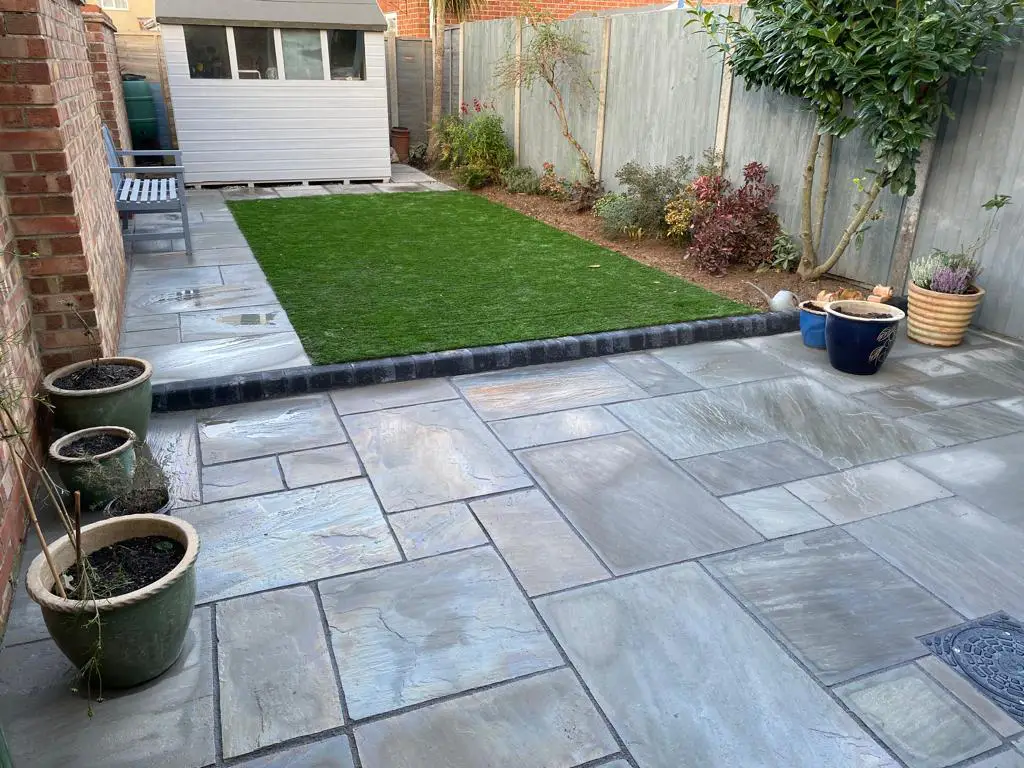
Garden Walkways
Paths that meander through planted areas or connect different parts of the garden. These can be formal and straight or curved and informal depending on the garden’s character.

Side Access Paths
The functional route from front to back garden. These need to handle wheelie bins, garden equipment, and occasional deliveries. Not glamorous, but essential.

Stepping Stone Paths
Individual stones set into lawn or gravel, creating a lighter-touch route through the garden. Less formal than continuous paving, and often the right choice where you want access without overwhelming the planting.
Material Options
The choice of material depends on several factors: the path’s purpose, the style of your property, what’s already in the garden, your budget, and how much maintenance you’re prepared to do. We work with most common options and can advise on what suits your particular situation.
Natural stone (sandstone, limestone, slate, granite) offers the most character and ages beautifully, though costs more than manufactured alternatives. Block paving provides durability and design flexibility at a moderate price point. Brick pavers suit period properties particularly well. Gravel is the budget option and works for informal paths, though requires more maintenance. Resin-bound surfaces give a contemporary look with excellent drainage.
Getting the Width Right
Path width is one of those details that’s easy to get wrong. Too narrow and it feels cramped; too wide and it dominates the space. As a rough guide: main access paths should be at least 90cm to allow comfortable single-file walking, ideally 120cm if two people might walk side by side. Secondary garden paths can be narrower—60 to 90cm works for most situations. Utility routes for wheelbarrows need 90cm minimum.
These aren’t rigid rules. Context matters. We’ll advise on proportions during the site visit.

FREE, no obligation quotes
We offer free, no-obligation quotes with clear, honest pricing. Our team will assess your pathway requirements, recommend the best solutions, and outline exactly what’s involved — with no pressure and no hidden costs.

Fully Insured Experts
Choose a fully insured pathway and landscaping company you can trust. Our insurance coverage protects your property and gives you complete peace of mind throughout every stage of your project.

Professional Installation
Getting the details right—correct falls for drainage, consistent joint widths, smooth transitions—is what separates professional work from DIY attempts that develop problems within a year or two.
Can you match a new path to our existing patio?
Usually, yes. If the same materials are still available, we can source them. If not, we’re experienced at finding complementary alternatives that work visually with existing features. Sometimes a deliberate contrast actually works better than an imperfect match.
How much maintenance will a path need?
Less than you’d think for properly installed hard surfaces. Occasional sweeping, perhaps an annual pressure wash if algae builds up. Gravel paths need more attention—topping up, raking, weed control. We’ll explain the maintenance implications of different materials during your consultation.
Do paths need planning permission?
Rarely for standard garden paths. Exceptions might apply in conservation areas, for listed buildings, or if the work affects drainage to a public highway. We’ll flag any potential issues during our assessment.
What about paths on slopes?
Sloping gardens present particular challenges—and particular opportunities. A well-designed stepped path can transform an awkward incline into an attractive feature. The key is getting step dimensions right (risers shouldn’t exceed 150mm for comfortable climbing) and ensuring adequate drainage so water doesn’t cascade down the path during heavy rain. For gentler slopes, a ramped path may work better, though gradients need to stay below 1:12 for comfortable walking.
What areas do you cover?
From our base in Wickham Bishops, we cover most of Essex and Suffolk. Regular working areas include Colchester, Chelmsford, Braintree, Witham, Maldon, Brentwood, Billericay, Southend-on-Sea, Basildon, Ipswich, Bury St Edmunds, Sudbury, Woodbridge, and surrounding towns and villages. Not listed? Get in touch anyway—we can usually accommodate projects within reasonable distance.
How long does installation take?
Timescales vary depending on path length and complexity. A straightforward front entrance path typically takes two to three days. More extensive garden pathway projects might run to a week. Weather can affect scheduling, particularly for work requiring dry conditions during certain stages.
Arrange Your Free Consultation
Whether you have a specific path in mind or just know the current situation isn’t working, we’re happy to visit, look at the options, and provide a quotation. No charge, no obligation.
Telephone: 01206 591017
Email: info@stanleypaving.co.uk
Request A Free Quote
Or complete the enquiry form on this page and we’ll be in touch within one working day.