

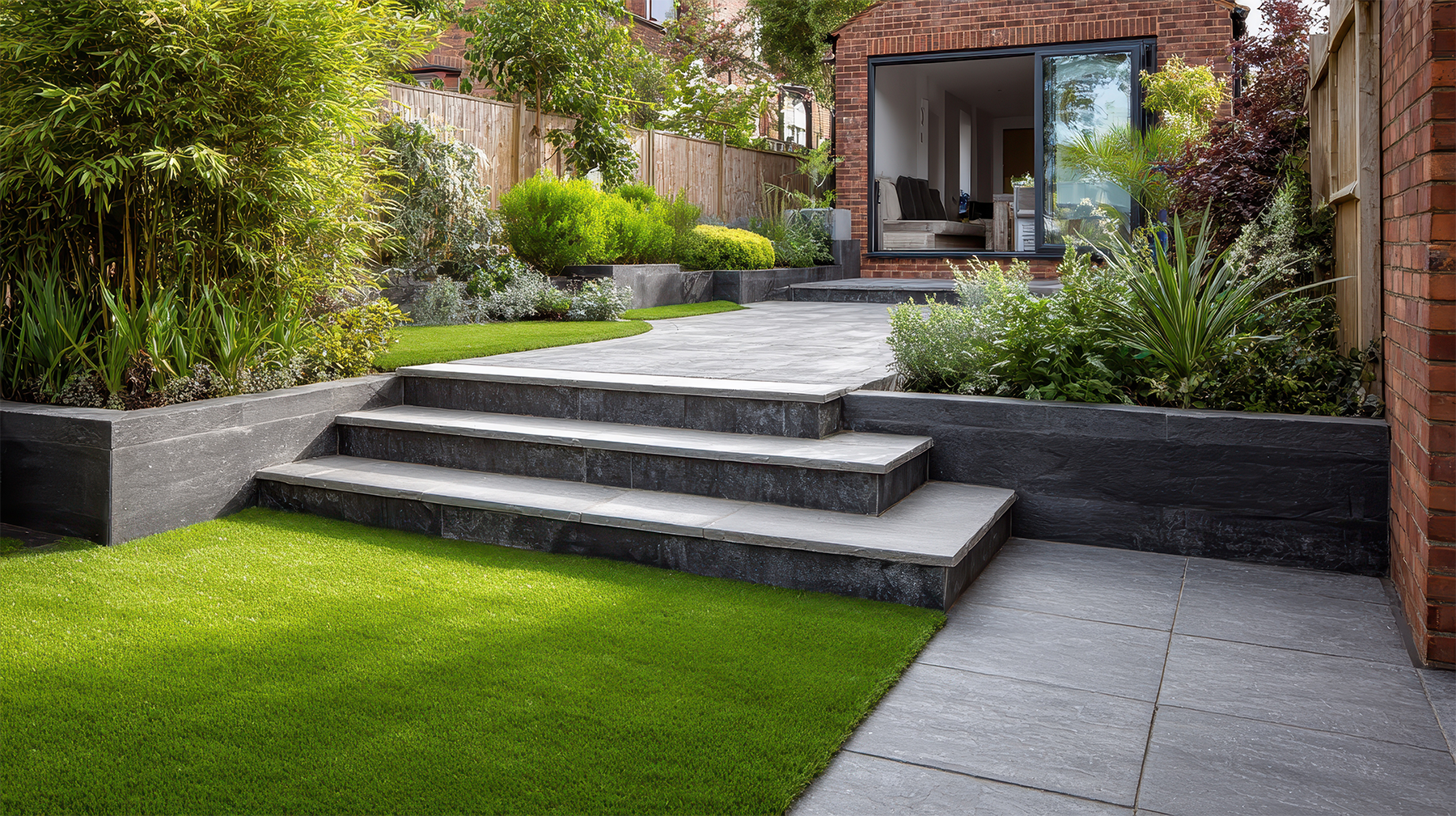
Porcelain Paving
Hard-wearing, low maintenance and built to last. Professionally installed porcelain paving for patios, paths and outdoor living spaces across Essex and Suffolk.
20+
YEARS EXPERIENCE
2-4
DAYS INSTALLATION
R11
SLIP RESISTANCE RATED
0%
WATER ABSORPTION
FREE
QUOTES & SURVEYS
Porcelain Paving Installers in Essex & Suffolk
Stanley Paving supplies and installs porcelain paving across Essex and Suffolk from our base in Wickham Bishops. We’ve spent years working with this material and we know what separates a solid installation from one that starts lifting after the first winter. It comes down to preparation, the right products, and understanding how porcelain behaves — which is nothing like natural stone.
Porcelain has become one of the most popular paving choices for patios and outdoor spaces in this part of the country. The slabs hold their colour year after year, they don’t need sealing, and they resist frost, staining and algae growth far better than sandstone or concrete. But porcelain also demands careful, specialist installation. Our team has the tools, the training and the hands-on experience to deliver results that last.

Porcelain Patios, Paths & Garden Paving
The bulk of our porcelain work is patios — everything from straightforward replacements to larger jobs that include paths, steps and raised planters. Slabs come in a broad range of finishes: stone-effect, wood-effect, concrete-effect. Greys, creams, anthracite, buff. Standard 600x600mm and 600x900mm sizes, plus larger format options where the space calls for it. We’ll help you choose what suits your property and your budget, then manage the entire installation.
Porcelain Paving That Stays Put
We also lay porcelain for garden paths, side returns, pool surrounds and covered outdoor areas. It’s particularly well suited to these spaces because of its slip resistance and the fact that it doesn’t harbour moss or lichen the way natural stone tends to.
If your current patio has had its day — cracked slabs, uneven surfaces, water pooling where it shouldn’t — we can strip it back and start again with a properly laid porcelain finish. Done right, it’ll last decades with virtually no upkeep.
Get in touch with our team to arrange your free site visit and no-obligation quote.


£2
M
Public Liability Insurance
500
+
Jobs Completed
100
%
Customer Satisfaction
Why Choose Porcelain for Your Patio?
Porcelain has quickly become one of the most specified outdoor paving materials in the UK. Once you understand what it offers compared to alternatives, the reasons are obvious.

Non-Porous & Maintenance-Free
Porcelain doesn’t absorb water. Full stop. That single property is what makes it so effective outdoors. No sealing required — not now, not ever. Stains from food, drink, oil and garden debris wipe clean without specialist products. And because moisture can’t penetrate the surface, you won’t see the green algae and black spot lichen that plagues sandstone patios across Essex every autumn.
Frost-Proof, Slip-Resistant & Colour-Fast
With virtually zero water absorption, porcelain won’t crack in freezing temperatures — a real advantage over natural stone in the British climate. All the porcelain we supply carries an R11 anti-slip rating, meaning it’s safe underfoot even when wet. UV resistance is built into the manufacturing process, so the colour you choose on day one is the colour you’ll still have in ten years. No fading, no bleaching, no gradual yellowing.

How We Install Porcelain Paving in Essex & Suffolk
Every porcelain paving project we take on follows the same proven process. We excavate to the correct depth, lay and compact a MOT Type 1 sub-base, then screed with a sharp sand and cement mix. Each slab is individually primed on the reverse with an SBR bonding slurry — this step is non-negotiable, because porcelain is non-porous and will not bond to cement without it. Skip the primer and the slabs will lift. We’ve seen it happen on jobs done by other contractors and it’s always the same story.
Slabs are then bedded onto a full mortar base with levels checked throughout. Joints are filled with a flexible, weather-resistant grout formulated for porcelain — not standard cement pointing, which cracks and fails. Cutting is done on-site with diamond-blade equipment, because 20mm porcelain is incredibly dense and standard masonry tools won’t touch it.
The whole process takes a bit longer than laying natural stone or concrete. But the end result lasts considerably longer, and the surface you’re left with needs almost nothing in the way of ongoing maintenance. We supply porcelain from trusted names including Brett, Marshalls, Stonemarket and Talasey, all R11 rated and frost-proof as standard.
Porcelain Paving vs Natural Stone: How They Compare
Natural stone — particularly Indian sandstone — has been the go-to patio material in Essex for years. It looks great when it’s first laid. The problem is what happens after that. Sandstone is porous, which means it absorbs water, stains and organic matter. Within a couple of years you’re looking at regular pressure washing, resealing and scrubbing off algae.
Porcelain sidesteps all of that. The manufacturing process — firing refined clay at temperatures above 1,200°C — produces a slab that’s essentially glass-hard and completely non-porous. It costs a bit more per square metre than mid-range sandstone, but over a ten-year period the total cost of ownership is lower because the maintenance bill is close to zero.
That said, porcelain isn’t the right choice for every project. If you want natural variation and a traditional look that weathers over time, stone has its place. We install both, and we’ll always give you an honest recommendation based on what you actually need rather than what costs us less to lay.
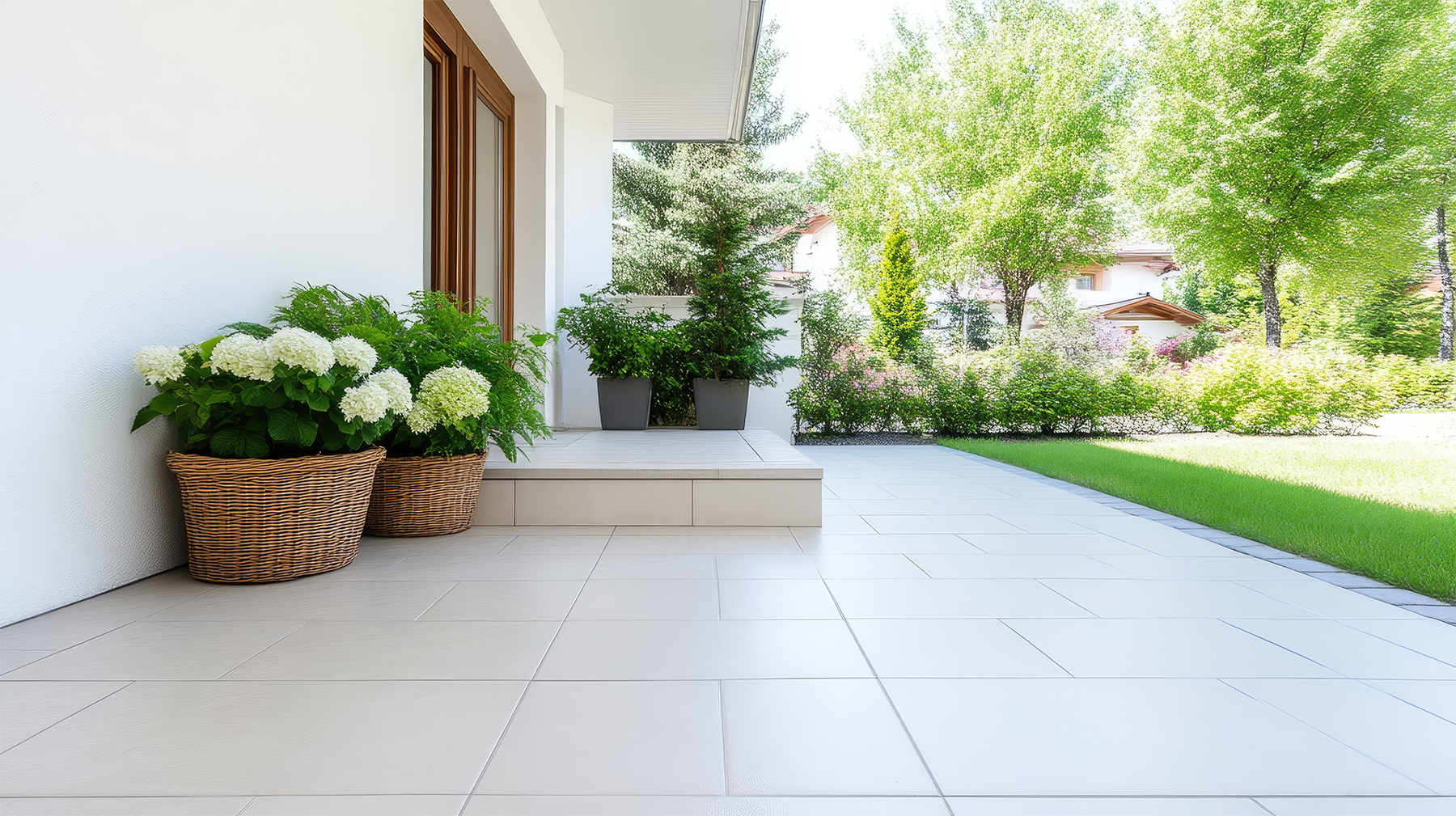
Book a Free Porcelain Paving Consultation
For professional porcelain paving in Essex or Suffolk, talk to Stanley Paving. We’ll visit your property, walk through the options and give you a clear, written quote — no obligation and no hidden costs.

FREE, No-Obligation Quotes
We visit your property, assess the site and talk you through the options before putting anything in writing. Our quotes are detailed, transparent and include everything — materials, labour, groundwork, the lot. No surprises once the work starts.

Fully Insured Porcelain Specialists
Our team is fully insured and trained specifically in porcelain installation — including SBR priming, diamond-blade cutting and flexible grouting. You’re not getting a general labourer with a trowel. You’re getting people who know this material inside out.

Guaranteed Workmanship
Every porcelain paving installation we complete is backed by our workmanship guarantee. If something isn’t right, we come back and sort it. That’s a promise we’ve kept since we started, and it’s a big part of why most of our work comes through recommendations.
We Supply & Install the Best Brands in the Industry









Frequently Asked Questions About Porcelain Paving
Where do you install porcelain paving in Essex and Suffolk?
We cover all of Essex and Suffolk from our base in Wickham Bishops. Our regular working areas include Maldon, Chelmsford, Witham, Braintree, Colchester, Brentwood, Billericay, Basildon, Southend-on-Sea, Ipswich, Sudbury and the surrounding towns and villages. Not sure if we reach your area? Just give us a ring and we’ll let you know.
How much does porcelain paving cost to supply and install?
It depends on a few things — the size of the area, which porcelain you go for, and how much groundwork is involved. As a rough guide, porcelain installed on a full mortar bed typically costs a bit more per square metre than concrete slabs but sits around the same level as good quality natural stone. The difference is what you save afterwards: porcelain needs no sealing, no specialist cleaning and virtually no maintenance for decades. We provide free, itemised quotes so you’ll know the exact figure before any work begins.
Is porcelain paving slippery in wet weather?
No. Every porcelain product we install carries an R11 anti-slip rating. The textured surface finishes are specifically engineered for outdoor use and perform well in rain, frost and damp conditions. In fact, because porcelain resists algae and moss growth (the main causes of slippery patios), it tends to stay safer underfoot than natural stone over time.
Does porcelain paving need to be sealed?
No. This is one of the biggest advantages porcelain has over natural stone. Because the material is non-porous — it absorbs essentially zero water — there’s nothing to seal. You won’t need to buy sealant products, and you won’t need to pay someone to reapply them every couple of years. A wash down with warm soapy water once or twice a year keeps it looking fresh.
How long does it take to install a porcelain patio?
For a typical patio of around 20–30 square metres, you’re looking at 2 to 4 working days depending on the amount of preparation and groundwork needed. Larger projects or those involving steps, retaining walls or complex layouts will take longer. We always give you a clear timescale at the quoting stage so there are no surprises.
What's the difference between porcelain paving and natural stone?
The main differences are in maintenance and longevity. Natural stone is porous — it absorbs water and stains, encourages algae growth and needs regular sealing to stay looking its best. Porcelain is non-porous, frost-proof, UV-resistant and requires almost no upkeep. Natural stone does offer a more traditional, organic look with natural colour variation, which some people prefer. We install both and we’re happy to talk you through the pros and cons of each for your specific project.
Can porcelain paving be used on driveways?
Porcelain can be used for light vehicular areas with the right specification and installation method, but it’s primarily designed for pedestrian use — patios, garden paths, pool surrounds and entertaining areas. For driveways with regular vehicle traffic, we’d usually recommend block paving, resin bound or tarmac instead. We offer all of these services and can advise on the best option for your property.
Why does porcelain paving need specialist installation?
Porcelain behaves very differently to natural stone or concrete. Because it’s non-porous, it won’t bond to standard cement — each slab needs to be primed with an SBR bonding slurry on the reverse before it’s laid. It’s also incredibly dense at 20mm thick, so it can only be cut accurately with diamond-blade equipment. Standard paving tools and methods simply don’t work. Getting this wrong leads to slabs lifting, cracking during cuts, and joints failing within months. It’s a specialist job and it needs to be treated as one.
Get in Touch About Your Porcelain Paving Project
Ready to discuss your porcelain patio or paving project? Contact our team for a free site visit and no-obligation quote anywhere in Essex or Suffolk.

01206 591017

info@stanleypaving.co.uk